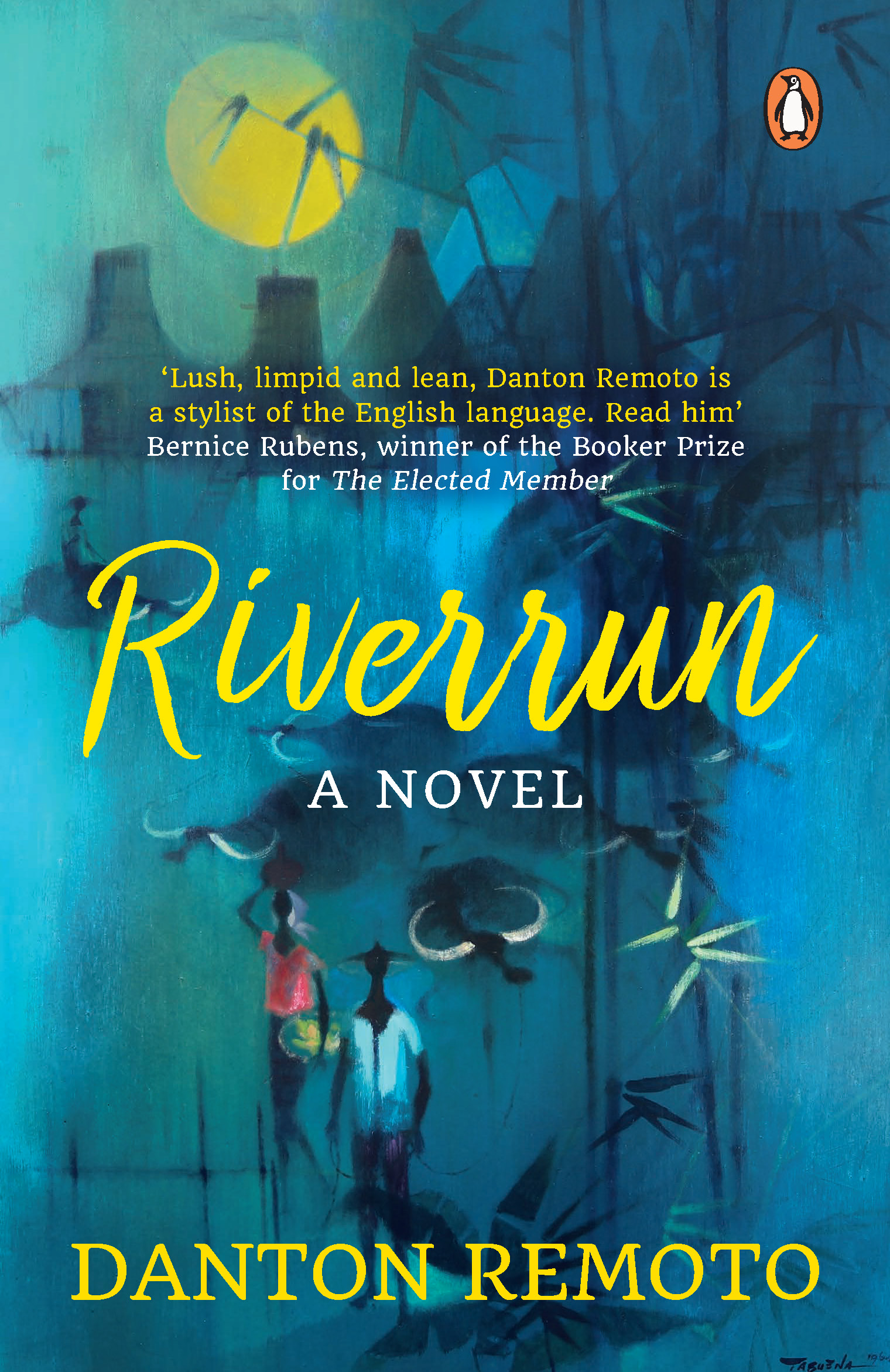
I read Danton Remoto's Riverrun at a striking time when, if one so placed my life beside that of the main character's, half the novel would be my past, and the other my possible future.
Riverrun's structure—that of short, flash fiction-style chapters each detailing a specific event in Danilo Cruz's life—guided my reminiscence. Its chapters didn't feel so much as "chapters" and more like brief, disparate moments in someone's biography, as if the book were a man's diary, but if it only included the diary's "Greatest Hits". Each of its chapters essentially had its standalone story (as proven by their being individually published on PhilStar), and no chapter really led itself to the next. As a result, reading Riverrun felt less like a novel per se but more like looking through the images of a scrapbook or an old slide projector, each vignette different than the last.
There's something oddly nostalgic and painful about Riverrun's first half, which detailed Danilo Cruz's life from his childhood to his high school years.
"Nostalgic" in the culture it showed, culture I had much taken for granted, recipes I'd grown up eating, practices I'd unknowingly hold on to until now. Even the way Remoto tackled a budding gay man's relationship with Filipino Catholicism felt surreal in its closeness to my and others' experiences: traumatic, forced, at times hypocritical, but still watching by the waysides, believing from a distance.
"Painful" in the wounds borne by the past, of governmental corruption all too familiar, of familial disconnect and the guilt it comes with, and, of course, the pain of figuring out one's sexuality in an ever chaotic, hetero-normative world. God, the push and pull of chasing a feeling despite being taught against it is far, far too palpable. So much of young Danilo's crush-induced, fluttery imagination only went as far as holding hands, touching elbows, and hugs. Even the thought of a kiss with another boy was framed as a question, not a desire, for it may be too far, too risky, too wrong.
A quiet, bittersweet emotion permeated the air after I read Riverrun's Part 1—which included Danilo Cruz's life up until his high school years. Slices of the life that Danilo had lived felt so close and dear to me. It made me happy, realizing I was there in similar places too, years ago. But, also, it vanquished me, realizing that I had forgotten my years ayonder. It took one sentence in this book to make me remember ice pops and Vicks Vaporub, and those words alone spelt childhood. I suppose there is comfort in knowing the memories are always there, waiting to be called, like secret agents.
Riverrun's second half (Part 2) dealt a lot more with Danilo's college life and beyond, or in my case, what I like to call "future memories". Detailed experiences of an imagined future flowed out of the book's pages, and the ever increasing temporal distance between chapters made the second half faster in pacing, mimicking the feeling of years accelerating too quickly when you grew up.
These weren't my experiences, but like Danilo, I too am an Atenean, and I too am trying to find my way in the winding maze of adulthood. I may not end up living Danilo's life, but I'd like to think I might. Although, I'm not sure how much he would appreciate knowing he carved out someone else's path, as he and many queer folk had given their all to avoid following the paths carved out for them. At the very least, I'd hope that I, like Danilo, still remain groovy, even after all these years.
Riverrun was not particularly climactic or eventful. It was a life. And, for me, it held itself quite close to home.
P.S.: My favorite chapters were How I Spent My Summer Vacation, Fourteen, When the Wind Blew, and Farewell, My Lovely.
Comments
Post a Comment